
BC Hydro is taking another major step toward building a smarter, more resilient energy grid. The provincial utility has launched a $1.1-million Vehicle-to-Grid (V2G) pilot program that will use electric school buses to test how EVs can both draw and return power to the grid in real-world conditions.
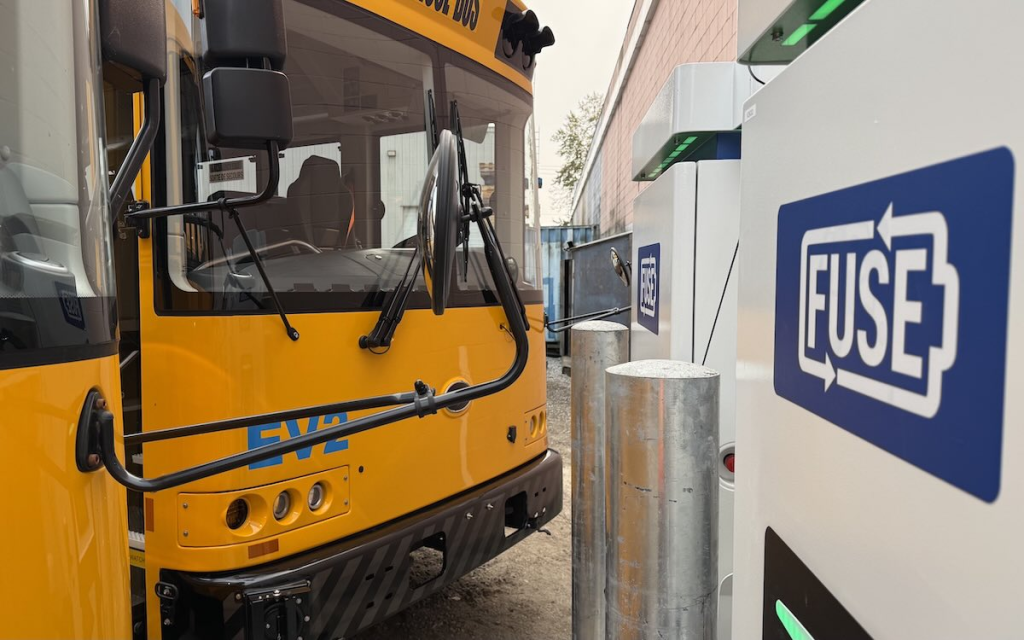
The program is a partnership between BC Hydro, Lynch Bus Lines, and Fuse Power Management, with additional support from NorthX Climate Tech and PacifiCan through Foresight’s BC Net Zero Innovation Network. BC Hydro is contributing $200,000 toward the project, which aims to explore how mobile energy storage can strengthen the province’s electrical infrastructure.
“This project is a glimpse into the future of energy,” said Charlotte Mitha, President and CEO of BC Hydro. “By exploring how mobile assets like EVs can be strategically deployed, we’re unlocking new ways to strengthen the grid, improve resilience, and deliver value to communities across B.C.”
Each electric bus used in the program can store up to 200 kilowatt-hours (kWh) of energy — enough to power approximately 75 homes for two hours during an outage. Once the pilot concludes, Lynch Bus Lines will continue using the buses for student transportation and grid support, while Fuse Power Management provides technical assistance.
The initiative builds on BC Hydro’s first V2G trial in 2023, which successfully tested a single electric bus at Powertech Labs in Surrey. By expanding this pilot, BC Hydro hopes to better understand how electric vehicles can act as distributed energy assets, helping to balance demand, reduce reliance on diesel generators, and improve system efficiency.
Following the program, BC Hydro plans to establish additional charging hubs across the province to further integrate V2G technology into its long-term strategy — a key milestone on the road toward a more sustainable and flexible energy system for British Columbia.