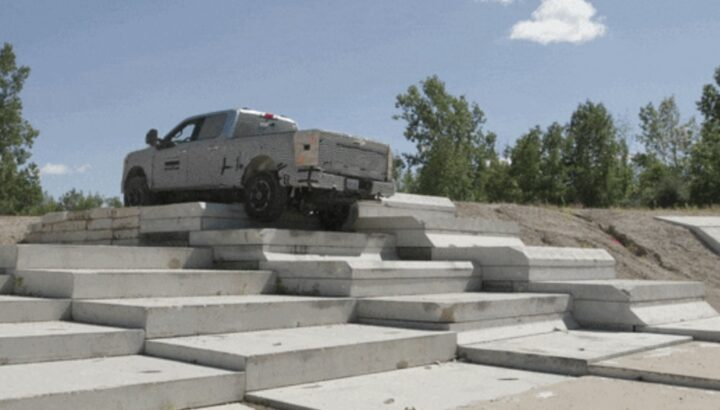
Ford has long been known for putting its vehicles through some of the toughest durability testing in the automotive industry, and now the company is using robotic drivers to make that process even more efficient. At Ford’s Michigan Proving Grounds in Romeo, Michigan, robots are now helping test trucks on some of the harshest courses imaginable, allowing engineers to gather critical durability data while reducing risks to human drivers.
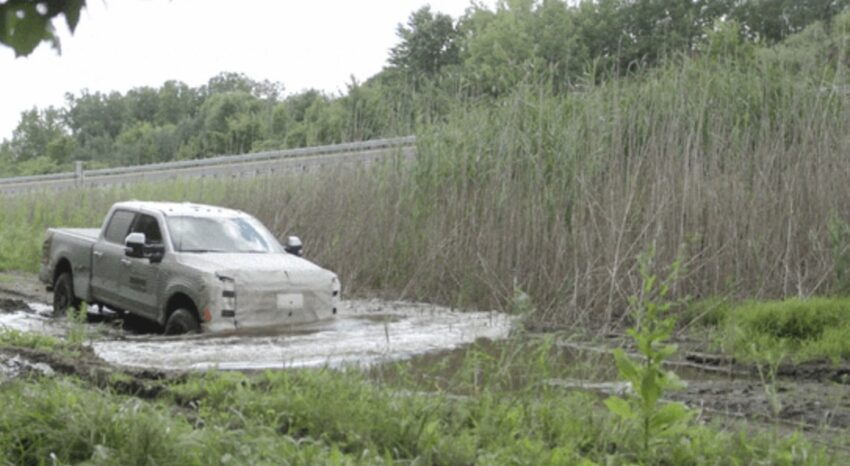
The testing process is designed to simulate years of real-world wear and tear in a remarkably short amount of time. According to Ford, its durability teams condense roughly 10 years or 150,000 miles of vehicle use into just four months of testing. Trucks are subjected to punishing conditions including potholes, rumble strips, rock crawling obstacles, water pits, steep inclines, and specially designed durability courses intended to expose potential weaknesses before vehicles ever reach customers.
One of the biggest advantages of robotic testing is consistency. Unlike human drivers, robots can repeat the exact same test over and over at identical speeds and conditions. This allows Ford engineers to collect more precise data and compare results with greater accuracy. Sensors and data loggers installed throughout the vehicles continuously monitor everything from suspension performance to wheel speeds and component temperatures during testing.
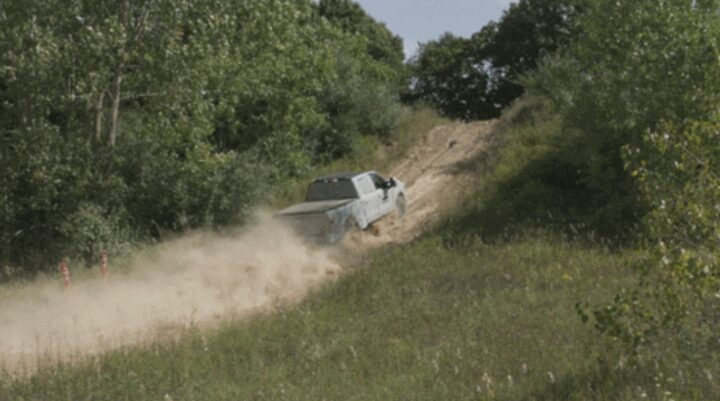
While robots now handle some of the most demanding durability routes, human drivers remain an important part of the testing process. Ford combines robotic precision with real-world driver feedback to evaluate vehicle performance, ride quality, handling, and overall durability. The result is a testing program that blends advanced technology with human expertise.
This rigorous validation process benefits vehicles across Ford’s lineup. Whether it’s a hard-working F-Series pickup, an adventure-ready Bronco, a family-focused Explorer, or an electric vehicle like the Mustang Mach-E or F-150 Lightning, every model must prove it can withstand years of customer use before reaching production. Ford’s continued investment in testing technology demonstrates its commitment to delivering vehicles that live up to the Built Ford Tough reputation.
As automotive technology continues to evolve, so too does the way manufacturers develop and validate new vehicles. Ford’s robotic testing program is another example of how innovation behind the scenes can help create stronger, more reliable vehicles for customers around the world.