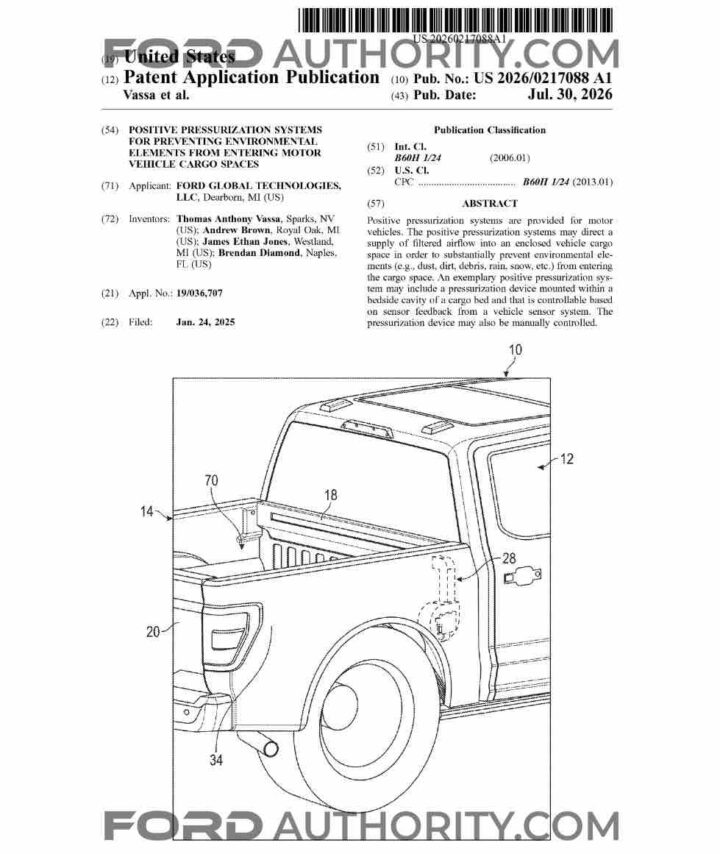
Anyone who regularly uses an SUV, truck, or van for outdoor adventures knows how quickly dust and dirt can find their way into seemingly sealed spaces. Ford is exploring an interesting solution to that problem. According to a recent report from Ford Authority (https://fordauthority.com/2026/07/future-ford-vehicles-could-stay-clean-by-pressurizing-cargo-areas/), a newly published Ford patent proposes using positive air pressure to help prevent contaminants from entering a vehicle’s cargo area.
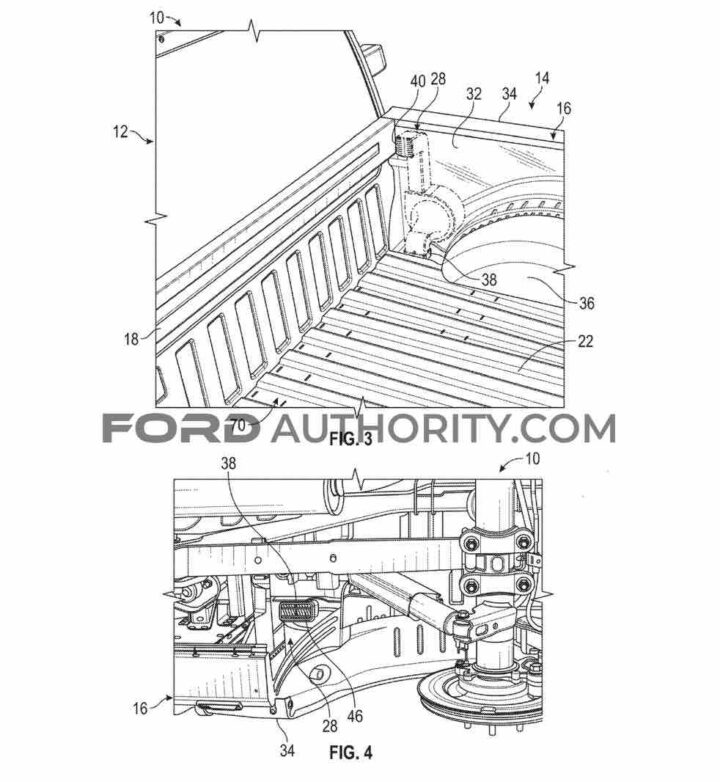
The basic idea is surprisingly simple. Ford’s proposed system would introduce filtered air into an enclosed cargo compartment, creating slightly higher air pressure inside than outside. When that pressure is maintained, air naturally wants to flow outward through small gaps and openings rather than allowing dusty outside air to work its way in. In effect, the system could create an invisible barrier against some of the dirt encountered while travelling.
That could be particularly useful for vehicles that spend significant time away from pavement. Anyone exploring BC’s network of gravel roads, forestry roads, campsites, and trailheads knows how persistent fine dust can be. Even with doors, windows, and cargo openings closed, particles can find their way through small gaps. Maintaining positive pressure could help protect luggage, camping equipment, tools, electronics, and other items stored inside.
The technology could also have interesting applications for Ford Pro customers. Contractors, mobile technicians, and other businesses often carry valuable tools and equipment that need to remain relatively clean. A Transit or other commercial vehicle capable of actively reducing dust intrusion could be especially useful on construction sites, industrial properties, and unpaved roads where airborne debris is a constant concern.
The concept is another example of Ford looking beyond traditional vehicle features to solve relatively specific real-world problems. Rather than simply adding another screen or piece of software, this idea uses airflow and pressure to potentially make cargo areas more useful in demanding environments. For vehicles designed around work and outdoor recreation, sometimes those practical innovations can make the biggest difference.
As with all Ford patent filings, there’s no guarantee that this particular system will appear on a future production vehicle. Ford regularly patents new concepts as part of protecting its intellectual property, and many never reach showrooms. Still, for anyone who has opened the back of their vehicle after a long drive down a dusty BC backroad and wondered how everything inside got so dirty, this is one Ford innovation that would be very easy to appreciate.