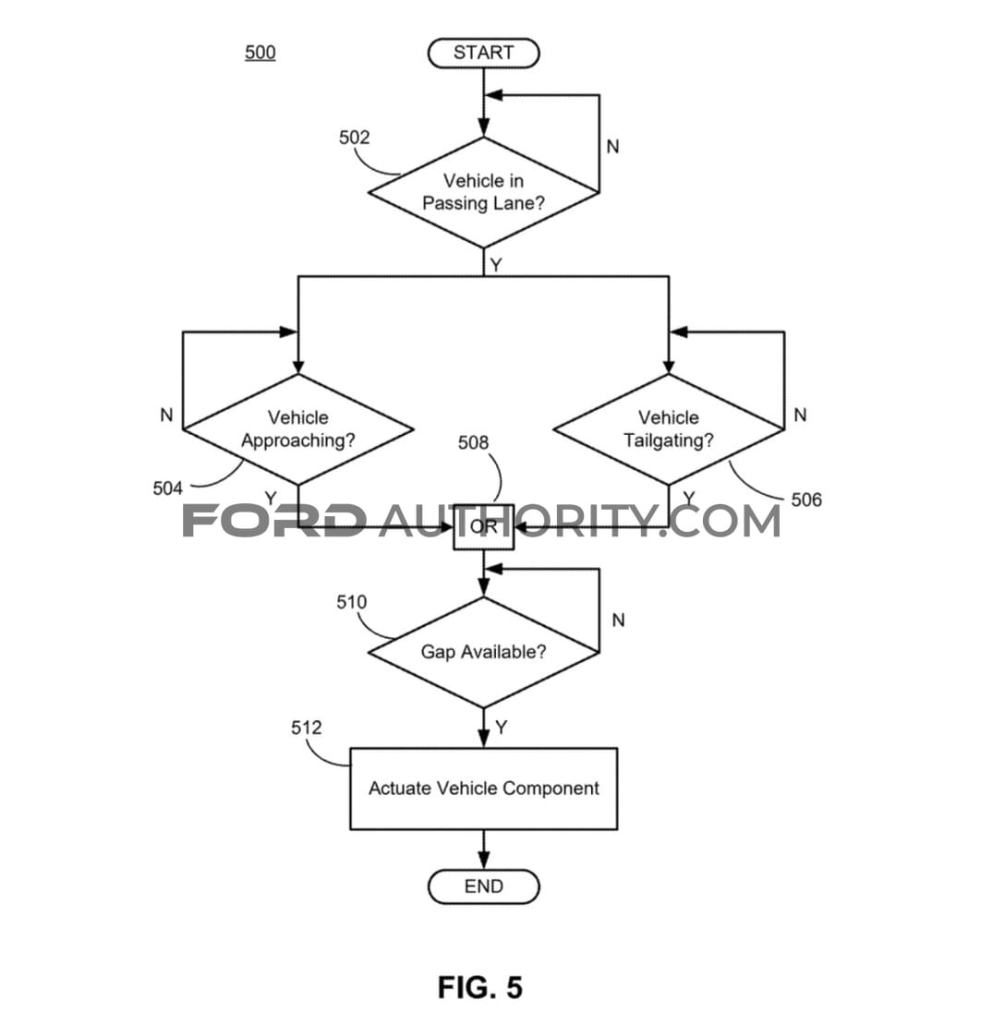
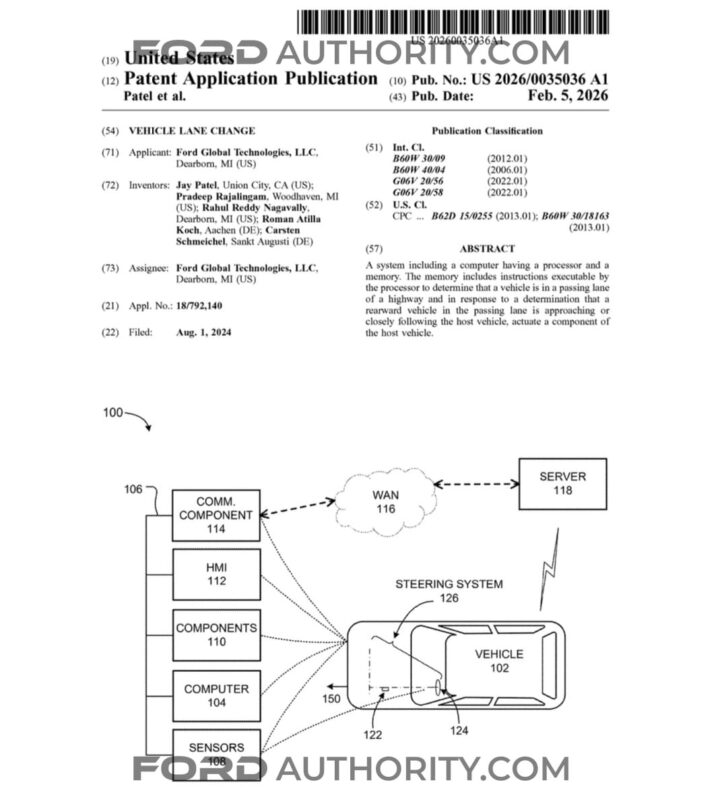
Ford continues to explore ways to enhance advanced driver assistance systems, and a newly published patent hints at an even smarter approach to automatic lane changes. The concept outlines a vehicle lane change system that could be used in future Ford models, potentially working alongside BlueCruise or other driver-assist technologies to make highway driving safer and more seamless.
Automatic lane change features are already becoming more common, particularly in systems like BlueCruise 1.5, which can initiate a lane change when approaching slower-moving traffic. This new patent builds on that foundation by adding another layer of awareness. Instead of simply checking whether the adjacent lane is clear, the proposed system would also evaluate vehicles rapidly approaching from behind.
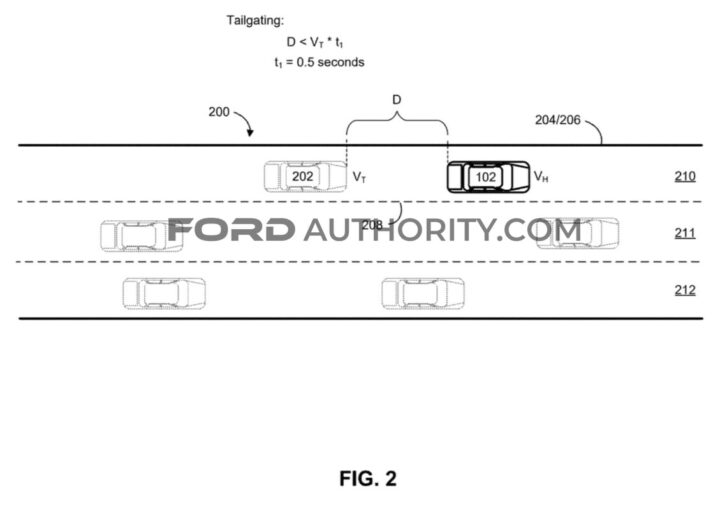
According to the patent, the system would assess not only the presence of vehicles in the target lane, but also the speed and behavior of vehicles coming up from the rear. If a vehicle is traveling significantly faster than surrounding traffic or behaving erratically, the system could factor that into its decision-making process. It would determine whether a sufficient gap exists to execute a safe lane change before initiating the maneuver.
This added intelligence could help reduce the risk of uncomfortable or potentially dangerous lane changes, particularly on busy highways where speed differentials can be significant. By analyzing both current lane traffic and rapidly approaching vehicles, the system aims to make automatic lane changes feel more natural and intuitive for drivers.
As with all patent filings, this concept represents a protected idea rather than a confirmed production feature. Ford routinely files patents to explore possible future technologies, and not every idea makes it to market. Still, innovations like this demonstrate Ford’s continued focus on refining driver assistance systems to improve both safety and confidence behind the wheel.
If features like this eventually become part of future Ford vehicles, they could further enhance the evolution of hands-free and semi-automated highway driving systems.