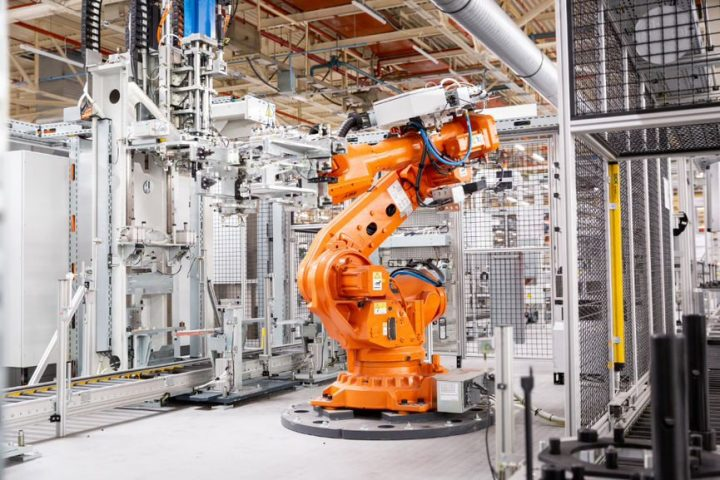
Ford’s push to refine electric vehicle manufacturing continues to gain momentum — this time through groundbreaking advances in motor production. At the company’s Halewood plant in the United Kingdom, Ford’s engineering teams are partnering with Cambridge Vacuum Engineering (CVE) to introduce electron beam welding as part of EV motor manufacturing.

The Halewood facility, which began producing electric motors in late 2024, plays a key role in Ford’s global electrification plan. It currently supplies motors for about 70 percent of Ford’s European EV lineup and can produce as many as 420,000 drive units per year if required. The addition of CVE’s advanced welding process could make that production more efficient and consistent than ever.
Supported by the Innovate UK Driving the Electric Revolution Challenge, CVE’s electron beam welding technology allows copper hairpin stators to be joined without extensive preparation — eliminating trimming steps required in traditional infrared laser welding. The result is stronger, cleaner, and more precise welds, with tensile strength up to six times higher than industry minimums.
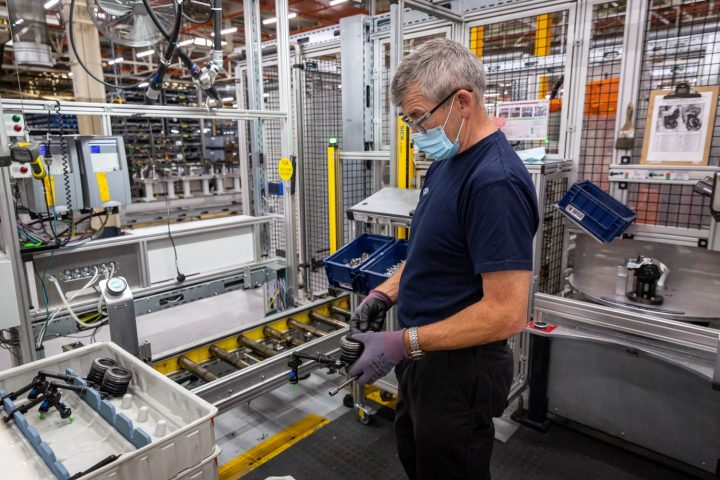
“This project is a clear opportunity to make significant further progress,” said Lee Turner, Ford’s Director of EU Powertrain Manufacturing Engineering. “We are grateful to have collaboration partners like CVE to work with as we investigate routes to full-scale industrialisation of this technology.”
Beyond the automotive sector, CVE’s technology could have far-reaching benefits for industries such as wind energy and nuclear manufacturing, where the same strength and precision advantages are highly valued.
By investing in processes like electron beam welding, Ford continues to demonstrate how innovation at every level — from design to assembly — is shaping the future of electric mobility.